
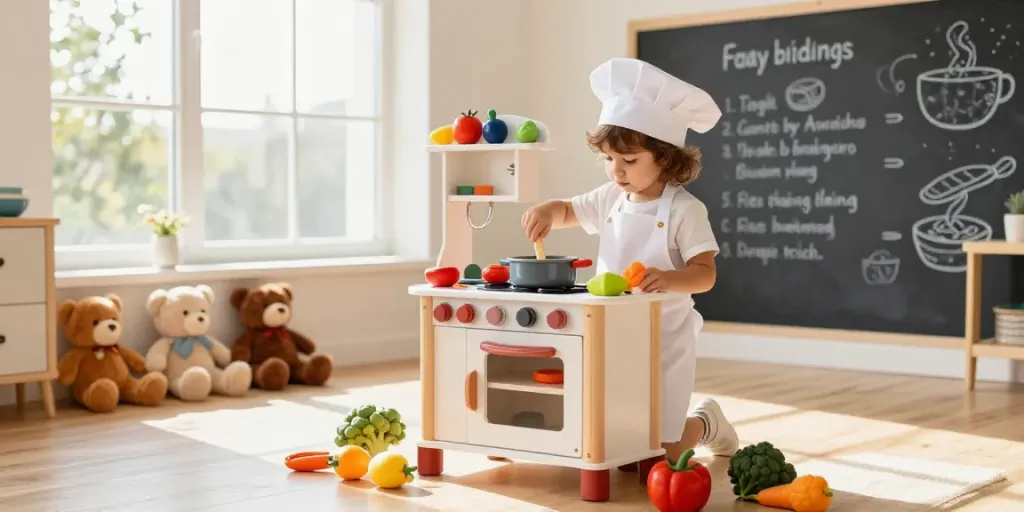
Understanding Kids Kitchens
Play kitchens are more than just toys; they are a gateway to imaginative play that fosters creativity and cognitive development in children. For parents seeking to nurture their child's early interest in cooking and role-play, investing in a kids kitchen can be an enriching decision. These miniature culinary spaces allow children to explore their creativity while mimicking adult behaviours, thereby enhancing social and emotional skills.
What is a Kids Kitchen?
A kids kitchen is a playset designed to simulate a real kitchen environment. These kitchen sets often include elements like a stove, oven, sink, refrigerator, and various kitchen accessories. They can be made from a variety of materials, including plastic, wood, or metal, and are designed to withstand the rigours of playtime. The physical layout and features vary widely, catering to different age groups and preferences.
Benefits of Play Kitchens for Child Development
Engaging with a kids kitchen can have numerous developmental benefits, including:
- Imagination and Creativity: Children can invent stories, create imaginary meals, and explore different roles, enhancing their creativity.
- Motor Skills: Manipulating kitchen tools and toys helps refine hand-eye coordination and fine motor skills.
- Social Skills: When playing with others, children learn to communicate, share, and cooperate.
- Understanding Daily Life: Play kitchens introduce young ones to the concepts of cooking and food preparation, helping them understand essential life skills.
Popular Styles and Features of Kids Kitchens
Today's kids kitchens come in a myriad of styles and features tailored to evolve with growing children. From modern designs with sleek finishes to rustic wooden options, parents can find kitchens that align with their aesthetic preferences. Some popular features include:
- Interactive Elements: Many kitchens come with sounds, lights, and functioning appliances that mimic real-life cooking experiences.
- Size and Adaptability: Certain kitchens are designed to be compact, suitable for small play areas, while others boast extensive layouts with multiple stations for collaborative play.
- Accessories: Essential kitchen accessories such as pots, pans, utensils, and play food are often included, enhancing the play experience.
Selecting the Right Kids Kitchen
Choosing the perfect kids kitchen can be overwhelming given the variety on the market. However, understanding your child's needs and play preferences can simplify the process.
Factors to Consider When Choosing a Kids Kitchen
When selecting a kids kitchen, consider the following factors:
- Age Appropriateness: Ensure the kitchen is suitable for your child's age group. Younger kids might require simpler designs, while older children may appreciate more complex features.
- Material Quality: Opt for durable materials that can withstand daily wear and tear. Wooden kitchens, while often pricier, can offer greater longevity compared to plastic options.
- Safety Features: Look for kitchens that are free from sharp edges and made of non-toxic materials to ensure safety during play.
- Ease of Assembly: Check if the kitchen requires a complicated setup. User-friendly designs can save you time and frustration.
Age-Appropriate Kitchen Sets for Different Developmental Stages
Kids kitchens vary significantly in functionality based on age:
- Toddlers (Ages 1-3): Simple setups with fewer parts that are safe and easy to manipulate.
- Preschoolers (Ages 3-5): More interactive kitchens with basic cooking tools and realistic accessories to encourage imaginative play.
- Older Kids (Ages 5+): Advanced features that include storage, multiple cooking stations, and interactive elements to enhance role-playing.
Comparison of Wooden vs. Plastic Kids Kitchens
The choice between wooden and plastic kitchens often comes down to personal preference, budget, and intended longevity:
- Wooden Kitchens: Typically sturdier and more aesthetically pleasing, wooden kitchens offer durability and can blend seamlessly into home decor. They are often viewed as an investment for long-term use.
- Plastic Kitchens: Often more affordable and lightweight, plastic kitchens are easy to move and clean but may not last as long as wooden versions.
Setting Up a Play Area
Creating an engaging play kitchen environment is essential for maximising playtime enjoyment and learning.
Creating a Safe and Inspiring Play Kitchen Environment
To set up a kid's kitchen, consider these tips:
- Designate a Play Zone: Choose a quiet space where your child can play without distractions. Having a warm and inviting backdrop can stimulate creative play.
- Organise Accessories: Keep play food, utensils, and kitchen tools neatly stored to encourage tidiness and responsibility.
- Utilise Child-Sized Furniture: Incorporate small tables and chairs for a complete culinary experience that makes your little chef feel empowered.
Essential Kitchen Accessories to Enhance Play
Enhancing the play kitchen experience with the right accessories can take imaginative play to the next level. Consider these essential accessories:
- Play Food: A variety of ingredients, from fruits and vegetables to packaged items, helps children learn about nutrition.
- Cookware: Pots, pans, cooking utensils, and cutting boards provide opportunities for realistic cooking scenarios.
- Dining Sets: Plates, cups, and cutlery allow children to create a dining experience, enhancing social play opportunities.
Incorporating Imaginative Play into Daily Activities
Encouraging imaginative play with kitchen sets can extend beyond the playroom. Here are a few tips:
- Cooking Together: Involve your child in real-life cooking to create connections between play and actual culinary experiences.
- Storytelling: Encourage your child to narrate stories while playing, which can help enhance their narrative skills.
Engaging Activities for Kids with Kitchen Sets
Engaging kitchen sets can foster creativity while providing educational experiences that may not be immediately apparent.
Creative Cooking Games and Scenarios
Here are some imaginative scenarios to encourage play:
- Restaurant Role-Play: Set up a 'restaurant' where your child can take orders and serve food to family members.
- Chef in Training: Have your child create a menu and ‘cook’ meals for family gatherings.
Educational Opportunities in Role-Playing
Through pretend cooking, children can learn basic math skills by measuring ingredients, and they can also develop reading skills by following simple recipe instructions.
Encouraging Social Interaction Through Play
Invite friends over for playdates, allowing children to collaborate and share ideas, which promotes essential social skills such as negotiation and sharing.
Maintaining and Caring for Kids Kitchens
To ensure longevity and safe play, regular maintenance of kids kitchens is essential.
Cleaning and Maintenance Tips for Longevity
Consider these cleaning tips:
- Regular Cleaning: Wipe down surfaces with mild soap and water after each play session to keep everything hygienic.
- Periodic Checks: Inspect the kitchen for loose parts or any signs of wear and tear, ensuring safety for your child.
Storage Solutions for Play Kitchen Accessories
Organising play kitchen accessories can keep the play area tidy:
- Storage Bins: Use bins to categorise food items and kitchen tools, making them easy to find and put away.
- Wall Shelves: Install shelves for an aesthetically pleasing and functional storage solution.
When to Upgrade or Transition from a Kids Kitchen
As children grow, their needs will change. Consider upgrading when:
- Your child shows interest in more complex culinary activities or functions.
- The kitchen no longer accommodates their play style or growth.
What is the best kitchen for kids?
The best kitchen for kids depends on their age, preferences, and space. Wooden kitchens tend to be favoured for their durability and design, but plastic options can work well for younger children due to their lightweight nature.
What age to get rid of kids kitchen?
Many children outgrow their kitchen sets around ages 8 to 10, but it ultimately depends on the child's interests. Observing when your child stops playing with the kitchen can guide your decision on when to transition.
How much does a kitchen set for kids cost?
Prices for kids kitchens can range from £50 for basic plastic models to several hundred pounds for elaborate wooden sets with multiple features.
Where can you buy kids kitchens?
Kids kitchens can be found at various retailers, both online and in-store. Popular options include toy stores, department stores, and dedicated online platforms.