A theme park robot may greet guests, carry supplies, perform on a stage, or inspect a ride. Those jobs need different hardware, safety rules, and staff plans, so the next wave will be judged by daily work rather than appearance.
- Guest contact: speech, movement, and safe behavior around people
- Backstage work: repeatable tasks away from crowds and show lighting
- Proof before purchase: a named job, measured results, and a clear failure plan
The job comes first
A robot built for a parade can focus on movement, timing, and remote control. A robot moving supplies needs wheels, a load rating, battery charging, and a route that stays clear while staff work nearby. Treating both as the same product leads to a poor fit.
The first question for a park operator is plain: what task should the robot do each day? A useful answer names the place, the task, the work period, and the person who takes over when the robot stops.
That last part matters because theme parks have crowds, weather, noise, costumes, wet floors, and changing routes. A machine that works in a quiet test room may need different sensors and controls beside a busy attraction.
Where the new robots may work
Public-facing robots have to read people without blocking them. A camera may help the system see a queue, while microphones and software handle speech. Those parts can fail when music, wind, or several voices reach the robot at once.
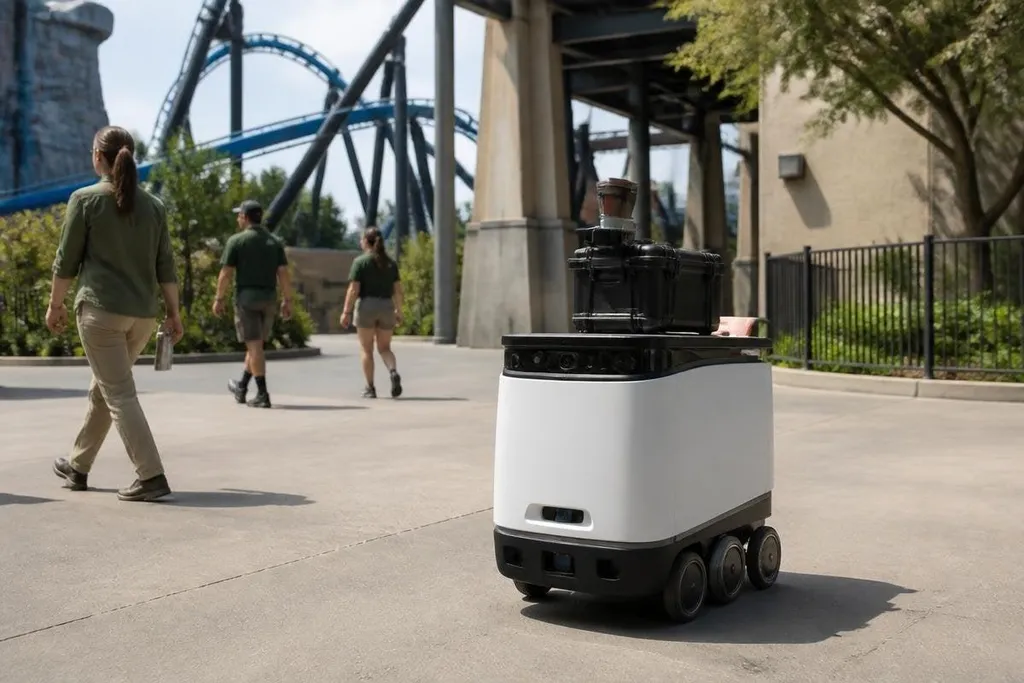
Backstage robots face a different set of problems. They may move food containers, clean a defined area, inspect equipment, or carry small loads between buildings. In those jobs, a clear route and a safe stop can matter more than a human-shaped body.
Performance robots sit between the two groups. They need repeatable motion and a show control system, yet staff must still reach them quickly. A park should ask how the robot behaves after a missed cue, a low battery, or a person entering its path.
A closed rehearsal can show a robot’s routine without showing how staff handle a guest stop or a failed handoff. Theme park robotics reports from Robot24.com can tie those events to the robot, test date, control system, and staff response before judging what remains unproven.
The part that stays unproven
A polished demo can show a robot completing one task. It doesn't show how often the task fails across a full operating day, how much staff time the robot needs, or how the system behaves after a sensor gets dirty.
Those gaps matter at a park because a stopped robot can become a guest-service problem. Staff may need to clear a space, move the machine, answer questions, and restart the system while the attraction keeps running.
The buyer also needs a cost beyond the machine. That may include charging equipment, software fees, spare parts, training, safety checks, and repairs. No price or deployment figure was supplied for this topic, so any claim about payback would be guesswork.
Speech-enabled machines may need a human operator for unusual questions. Legged units may need a marked route and a slower speed near guests.
Robot arms may need a fixed work cell instead of open access. The right design follows the task.
A buying check for park operators
Use this list before a pilot gets approved:
- Name the task: write the exact action the robot must repeat.
- Mark the route: record doors, slopes, wet areas, queues, and staff crossings.
- Set the handoff: name the person who takes control after a fault.
- Measure the shift: track completed tasks, stops, charging time, and staff help.
- Test the bad day: include noise, blocked paths, low light, and a dirty sensor.
- Price the support: count training, software, parts, repairs, and storage.
This check turns a broad robot plan into a test that a park can review. It also gives the supplier a fair target instead of asking for a machine that does everything.
What comes next
New theme park robots will likely split into clearer groups: machines for guests, machines for shows, and machines for work areas. That may make them less theatrical, but it gives operators a better way to measure results.
I'd wait for a robot with a named task, a timed trial, and a documented recovery plan. Until those details are available, the costume is easy to judge; the business case is still open.